|
| ------------
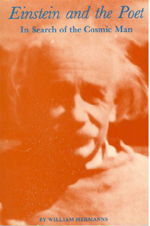
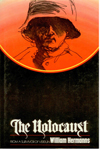
The Holocaust -from a Survivor of Verdun Einstein & the Poet - In Search of the Cosmic Man
|
Welcome
To My Neighbor
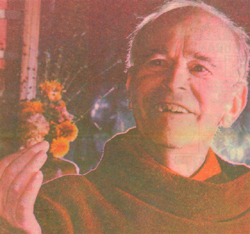
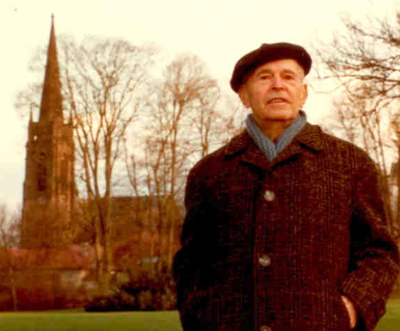
William Hermanns (1895-1990) was one of the best personally informed authorities of the events in Germany from World War I through the Hitler era. His gift to the world was as a Poet Sociologist shining light on conscience from the trenches of war to the mountain top castle. In 1895 Wilhelm was born in Koblenz, Rhineland, Germany to Michael Hermanns and Bertha (Wolff) Hermanns. Willi was orphaned at the age of 10 and raised by his aunt in a village by Mönchengladbach, Germany close to the Dutch border.
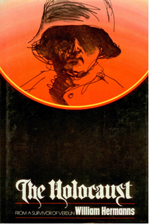
In 1914 Willi enthusiastically enlisted as a nineteen-year-old volunteer in the Kaiser's army. He became one of the longest living survivors of the Battle of Verdun, where a million young German and French soldiers lost their lives. His book The Holocaust - from a Survivor of Verdun (Harper & Row, NY 1972) recounts some of his memorable war experiences to trace the path of discovering his conscience and spiritual guidance in the midst of what he called “the raging mass mind.” The Vow on the Battlefield Willi
made a vow on the battlefield of Verdun, after being half buried by
an exploding shell, "God, save me, and I will serve you as long as I
live." He used the word God to describe a Power outside of
himself. He survived by following a felt inner guidance and was
instrumental in saving the lives of 200 comrades. He often
referred to that vow and was quite concerned to understand and fulfill
it up to his death. Following
Hermanns’ return from forty
months in French captivity in 1920, he resumed his studies at the Universities
of Berlin, Munich and Frankfurt, and, in 1926 under the tutelage of Franz
Oppenheimer, received his doctorate in Sociology.
While awaiting a promised post to open in the League of Nations, he was
active in the League for Human Rights, in the Walter Rathenau Society, and in
the Alexander von Humboldt Club, with the
goal of creating a united Europe. At
this time, he also gained a literary reputation with his poetry and
educational plays written for Berlin Radio. Dr.
Hermanns’ 1930 broadcast "Genius and Tenacity," about his
conversation with Einstein, made him suspect with the ever more popular Nazi
Party. After Hitler came in
power, Hermanns' anti-war poetry caused his poetry and manuscripts to be
seized and thrown onto the house-high auto de fé
of books before the University of Berlin on May 10, 1933.
He witnessed Goebbels shouting his “Inquisition” speech as the
students in brown uniforms marched and sang around the fire. In
January 1934 Dr. Hermanns fled Germany, and as a refugee in Lisbon, Paris and
London, taught languages and literature. In
1937 he was allowed entrance into the United States and worked at first in the
New York Institute for the Blind, and then, thanks to his article "The
Principles of Teaching" published in the journal Education
in September 1939, was invited by Prof. Sorokin to lecture and research at
Harvard University. During the Second World
War, he worked in the Office of Strategic Services (OSS) in Washington, DC, in
the rank of a captain. IN 1945
upon hearing of the death of his sister and niece, 35 other relatives and over
200 friends in Nazi concentration camps, he moved to California to retreat
from the world as a night watchman in a
Christian Science sanatorium. Through
his contemplation and academic
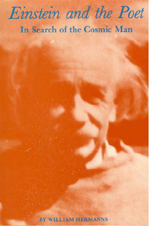
acquaintances, especially his friendship with Einstein (described in Einstein
and the Poet - In Search of the Cosmic Man (Branden Press, Brookline Village, MA, 1983),
he decided to continue with his mission of teaching the importance of
the conscience’s guidance, inclusive cosmic religious feelings and
the World Youth Friendship Parliament. In
1946 he was appointed Professor of German Language and Literature
at San Jose State College (now University) to serve until 1965,
when he became emeritus professor. From
1973-1984 he was a Visiting Scholar
in the Hoover Institution for War,
Revolution and Peace at Stanford
University. Hermanns'
other published works include: Passion & Compassion (1948); Mary
and the Mocker (Our Sunday
Visitor, Huntington, IN, 1953; "Die
Feder stockt (pre-published excerpt from Seelenhunger - Erlebnisse und Gedichte.
Verlag Rudolf Riethausen, Hanau, 1983). He has numerous English and German
unpublished manuscripts and poems. In 1977 President Walter Scheel of the
Federal Republic of Germany awarded him lifelong help from the Presidential
German Artist Aid Fund. In 1983 the Einstein-Hermanns Foundation was incorporated by Professor Hermanns and international friends to foster reliance on intuition and conscience for intercultural exchange and understanding. Through grassroots efforts the World Youth Friendship Parliament was inaugurated on July 1, 1988 at the seaside Villa Muramaris on the Swedish island Gotland in the Baltic Sea. The Foundation was disbanded in 1990. Recognition of William Hermanns' Reconciliation Efforts in Germany and France In
September 1989 the Mayor of Mönchengladbach honored him for his life’s
dedication to reconciliation between Jews and Christians at a city-sponsored
reunion of its citizens who fled the Nazis, and on the following day the Mayor
of Verdun awarded him the Verdun Medal of Honor for his dedication to the
reconciliation between the French and Germans.
|
Recommended Resources Please support our sponsors Click image to visit their website ~~~~~~~~~~ ~~~~~~~~~~ Norton & Holtz Business Solutions ~~~~~~~~~~ ~~~~~~~~~~
~~~~~~~~~~
|
|
_______________________________________________________________________________________________________________________________
|